Federal criminal cases are structurally and procedurally different from state cases in Texas, and the stakes are higher at every stage. Mandatory minimum sentences, federal sentencing guidelines, and a conviction rate above 90 percent in federal court make early, experienced representation essential. Contact us to schedule a confidential consultation so you can understand your situation and your options before making any decisions.
Whalen Law Office has resolved more than 2,500 criminal and juvenile charges since the firm was founded in 1997. Our attorneys are recognized by Super Lawyers, named among Best Lawyers in America, and Board Certified® in Criminal Law by the Texas Board of Legal Specialization. If you need a federal criminal defense attorney near you in Plano or the surrounding Collin County area, contact us today.
Federal Criminal Defense in Plano and Collin County
Plano is the largest city in Collin County, and federal charges arising here and across the county — including McKinney, Allen, Frisco, and Richardson — are prosecuted by the U.S. Attorney’s Office for the Eastern District of Texas. Understanding which federal court has jurisdiction over your charges, which AUSA is handling the case, and how the Eastern District approaches the specific allegations you face is the kind of local knowledge that shapes a defense from the first hearing.
Federal charges differ from state charges in both the procedural framework and the sentencing exposure. State criminal cases in Texas are prosecuted by county or district attorneys and heard in state court. Federal cases are investigated by federal agencies, prosecuted by AUSAs, and tried in U.S. District Court under the Federal Rules of Criminal Procedure. The sentencing framework is governed by the United States Sentencing Guidelines rather than Texas law, and mandatory minimums set statutory floors that apply regardless of individual circumstances. Having an attorney admitted to federal court and who regularly appears before the Eastern District of Texas is not a preference. It is a necessity.
Federal Court for Plano Residents: Eastern District of Texas, Sherman Division
Federal charges involving Plano, Texas, are typically handled in the Sherman Division of the U.S. District Court for the Eastern District of Texas. Because Plano is primarily located in Collin County, with a small portion in Denton County, and both counties fall within the Eastern District of Texas, Sherman Division, most Plano federal cases are heard there. Venue in federal court is determined by where the alleged conduct occurred; the Sherman Division serves as the primary venue for federal cases arising from Plano.
Understanding the procedural practices and standing orders of the specific judge assigned to your case, and how the U.S. Attorney’s Office for the Eastern District approaches the charges you face, is practical knowledge that matters at every stage. Appeals from convictions in the Eastern District of Texas go to the Fifth Circuit Court of Appeals in New Orleans, which has its own body of precedent on federal sentencing, constitutional issues, and evidentiary questions that a federal defense attorney must know well.
The attorneys at Whalen Law Office have practiced in the Eastern District of Texas and are familiar with its procedures, local rules, and the standards it applies at both the trial and appellate levels.
Received a Federal Target Letter in Plano?
A federal target letter is a written notice from the U.S. Attorney’s Office that you are the subject of a grand jury investigation. Receiving one means the government has developed evidence it believes supports a finding of probable cause that you committed a federal offense, and it is actively preparing to seek an indictment. This is one of the most consequential documents you can receive, and the time to retain a federal criminal defense attorney is the moment it arrives.
Federal agents may also approach you directly for a voluntary interview before any letter or charges are filed. These conversations feel informal but are not. Statements made to FBI agents, IRS investigators, or any other federal officer can be used against you in court, and even minor inconsistencies can form the basis of a separate false statements charge under 18 U.S.C. § 1001. Your Fifth Amendment right to remain silent applies from the moment of first contact, and you have the right to counsel before speaking with investigators.
At the grand jury stage, the government presents evidence to a panel of citizens to determine whether there is probable cause to indict. You have no right to appear or present your own evidence before the grand jury. Your attorney can, however, engage with the U.S. Attorney’s Office before the indictment is returned, present facts that may affect the scope or terms of any charges, and in some cases prevent an indictment from being filed at all. Early retention of counsel at the investigation stage is among the most impactful decisions a federal criminal defendant can make.
How Federal Cases Proceed: From Arrest to Trial
After an indictment is returned, the process begins with an arraignment, during which charges are formally read, and an initial plea is entered. Shortly after, a bail hearing is held before a U.S. Magistrate Judge to determine whether you will be released pending trial or detained in federal custody. Federal pretrial detention is governed by the Bail Reform Act, and the government may seek detention on grounds of flight risk or danger to the community. For certain charges, including drug trafficking and crimes of violence, there is a statutory presumption in favor of detention that your attorney must rebut.
There are no bondsmen in the federal system. If you are released, it is under court-ordered conditions that may include electronic monitoring, travel restrictions, surrender of your passport, and regular check-ins with Pretrial Services. Being held in custody during the pendency of your case affects your ability to help build your own defense, and fighting for release from the outset is part of our representation.
Discovery follows arraignment, during which the government must produce the evidence it gathered during its investigation. In complex federal cases, this can include financial records, wiretaps, surveillance logs, and statements from cooperating witnesses. Your attorney analyzes this material to identify Fourth Amendment suppression issues, weaknesses in the government’s theory, and defense strategies to develop before trial. If the case goes to trial, the government must prove every element of the charge beyond a reasonable doubt before a federal jury.
Federal Sentencing Guidelines and Mandatory Minimums
Federal sentencing is governed by the United States Sentencing Guidelines (USSG), which assign a base offense level to the charged conduct, adjust it up or down based on specific case facts, and then cross-reference the defendant’s criminal history to produce a recommended sentencing range. Federal judges are required to calculate this range and consider it, though they retain discretion to impose a sentence outside the range in appropriate cases.
Mandatory minimums operate as a separate constraint. For specific federal drug offenses measured by drug type and quantity, Congress has set statutory minimum sentences below which a judge cannot go, regardless of the guideline calculation or individual circumstances. Safety valve provisions under 18 U.S.C. § 3553(f) allow eligible first-time drug offenders to be sentenced below the mandatory minimum if they satisfy specific criteria and provide a complete proffer of information to the government. Whether a defendant qualifies for safety valve treatment and whether the government’s guideline enhancements are legally sustainable are among the most consequential questions in a federal drug case.
Sentencing in non-drug cases also involves significant complexity. Enhancements for role in the offense, use of a firearm, obstruction of justice, or the dollar amount of loss in fraud cases can substantially increase the guideline range. We analyze the guidelines calculation in every case and challenge any enhancements the government seeks to apply.
Federal Plea Agreements and Your Options
More than 90 percent of federal criminal cases are resolved through plea agreements rather than trial. A federal plea agreement sets out the charges to which the defendant pleads guilty and, in many cases, the sentencing recommendation the U.S. Attorney’s Office will make. Cooperation agreements — in which the defendant provides substantial assistance to the government in exchange for a motion for downward departure at sentencing — can result in sentences significantly below the guideline range. Proffer agreements allow defendants to share information with the government under limited-use protections while both sides evaluate whether a broader cooperation arrangement makes sense.
At Whalen Law Office, we analyze every proposed plea against the realistic risks of trial, the applicable guideline range under each scenario, and the specific terms the government is offering. We will never recommend accepting a plea without that full analysis, and where the evidence supports going to trial, we are fully prepared to do so. When a negotiated resolution serves our client’s best interest, we fight for the most favorable terms available.
Federal Practice Areas We Handle in Plano
White-Collar Crime and Financial Fraud
Federal financial crime investigations are often among the longest-running federal cases, built over months or years by the FBI, IRS Criminal Investigation, SEC, or USPS Inspection Service before charges are filed. We defend clients charged with securities fraud, tax evasion, healthcare fraud, mail and wire fraud, and bank and mortgage fraud. Wire fraud under 18 U.S.C. § 1343 and mail fraud under 18 U.S.C. § 1341 are among the most broadly charged financial crimes in the federal system because the statutes reach virtually any scheme that uses electronic communications or the postal system. We also handle embezzlement and money laundering cases under 18 U.S.C. § 1956, which commonly accompany fraud charges and carry substantial independent sentencing exposure.
Federal Drug Charges
Federal drug charges carry mandatory minimum sentences tied to the type and quantity of the controlled substance involved, and drug conspiracy allegations can reach defendants with minimal direct involvement in distribution. Drug trafficking charges generate sentencing exposure measured in decades, and the mandatory minimums that apply leave little room for judicial discretion without a departure mechanism. Federal drug possession charges arise in specific federal contexts and carry their own sentencing parameters. We evaluate safety valve eligibility, challenge guideline calculations, and scrutinize the Fourth Amendment basis for every search and seizure that produced the evidence.
Federal Sex Crimes and Crimes Against Children
Federal sex crime charges, including possession and distribution of child sexual abuse material (CSAM) under 18 U.S.C. § 2252, sex trafficking, and online solicitation of a minor, carry severe mandatory minimum sentences and are among the most aggressively prosecuted offenses in the federal system. These cases typically involve digital forensic evidence, undercover law enforcement operations, and multi-agency investigations. Our federal sex crime defense work includes challenging the validity of digital evidence, asserting Fourth Amendment protections against unlawful searches and seizures, and scrutinizing the procedures used in government sting operations.
RICO and Criminal Enterprise
RICO charges under 18 U.S.C. § 1961 and federal criminal conspiracy allegations are among the most structurally complex cases in federal court. RICO allows the government to aggregate years of conduct across multiple defendants into a single indictment tied to an alleged criminal enterprise, with sentencing exposure that reflects the full scope of the enterprise’s activities. Racketeering cases require attorneys who understand both the underlying predicate offenses and the enterprise theory the government is advancing.
Cybercrime and Computer Fraud
Federal cybercrime charges under the Computer Fraud and Abuse Act (CFAA) and related statutes cover unauthorized access to systems, computer-facilitated fraud, and attacks on protected infrastructure. These cases are investigated by the FBI’s cyber division and typically involve digital forensic evidence that requires careful independent examination. We also handle federal charges arising from cryptocurrency fraud and money laundering through digital asset transactions.
Federal Violent Crimes, Firearms, and Public Corruption
We defend clients charged with federal firearms and weapons offenses, including felon-in-possession and use of a firearm in furtherance of a drug trafficking crime, which carry mandatory consecutive sentences. We also handle federal violent crimes, murder, and homicide charges falling under federal jurisdiction. Public corruption and bribery charges are federal offenses that regularly arise in the Eastern District of Texas and require attorneys with specific knowledge of how those cases are built and defended.
Federal Appeals in Texas
A federal conviction is not the final word. If you have been convicted in the U.S. District Court for the Eastern District of Texas, you have the right to appeal to the Fifth Circuit Court of Appeals. A notice of appeal must be filed within 14 days of the judgment of conviction, and the appellate record is limited to what was developed at the district court level.
We pursue federal appeals on grounds including sufficiency of the evidence, evidentiary errors, constitutional violations, ineffective assistance of trial counsel, and sentencing guideline errors. Post-conviction relief under 28 U.S.C. § 2255 is also available to federal defendants whose convictions or sentences resulted from constitutional violations that could not have been raised on direct appeal. Both tracks require timely action and attorneys who understand the specific legal standards the Fifth Circuit applies.
Why Choose Whalen Law Office for Federal Defense in Plano
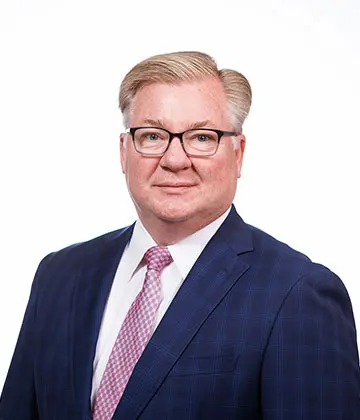
Founded in 1997, Whalen Law Office has built its practice around federal and complex criminal defense in North Texas and beyond. James P. Whalen, the firm’s founding partner, is Board Certified® in Criminal Law by the Texas Board of Legal Specialization, a credential held by fewer than one percent of Texas attorneys. He is recognized by Super Lawyers and named among Best Lawyers in America. The firm’s attorneys are members of the National Association of Criminal Defense Lawyers (NACDL) and the Texas Criminal Defense Lawyers Association (TCDLA).
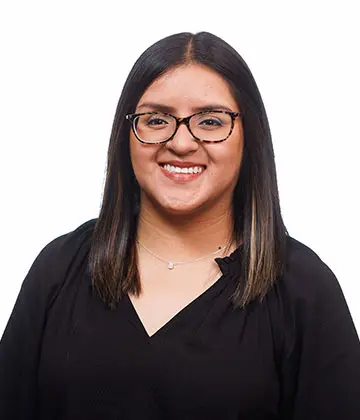
Our attorneys, including James P. Whalen, Ryne T. Sandel, and Grace A. Tucker, handle each case with the individual attention that federal charges demand. With more than 2,500 criminal and juvenile charges resolved, we have litigated across the full spectrum of federal practice, from pre-indictment representation through trial and post-conviction appeal. Our offices are in Frisco and Sherman, Texas, which means Plano and Collin County clients are working with attorneys who know this area, its courts, and the federal prosecutors and judges who operate within them.
How Much Does a Federal Criminal Defense Lawyer Cost?
For complex federal matters in North Texas, retainers often run from the low five figures for straightforward cases to six figures, depending on the complexity of the charges, the number of co-defendants, the anticipated volume of discovery, and whether the case is expected to proceed to trial. Multi-defendant federal conspiracy and white-collar fraud cases involving extensive financial records are among the most resource-intensive and reflect that in their costs.
Cost is a legitimate and important question, and we address it directly. We offer a confidential consultation to help you understand your situation and evaluate your options before making any decisions. Everything you share during that consultation is protected by attorney-client privilege and carries no obligation. Contact Whalen Law Office today to schedule yours.
Serving Plano, Collin County, and the DFW Area
Whalen Law Office represents federal criminal defendants throughout the Eastern District of Texas, with offices in Frisco and Sherman. We serve clients in Plano and across Collin County, including those in Richardson, Allen, McKinney, Garland, Carrollton, Rowlett, and Dallas. For federal charges requiring representation in courts outside North Texas, our attorneys travel to federal courts nationwide.
If you are facing federal criminal charges in Plano, you need a skilled and experienced Plano federal criminal defense lawyer who can provide effective representation at every stage of your case. Contact Whalen Law Office today for a confidential consultation.